📅 Through January 17, 2027
🕖 Wednesday: 10 a.m.-5 p.m., Thursday: 10 a.m.-8 pm, Friday-Sunday: 10 a.m.-5 p.m.
📍 Seattle Art Museum: 1300 First Ave., Seattle
💰 Adults: $29.99, seniors and military: $24.99, students and teens: $19.99, children 14 & under and SAM members: free
Art is never static — it’s always changing depending on who’s looking. But there’s a special thrill to be found in art that showcases its own mutability, that “paints” with the viewer’s response.
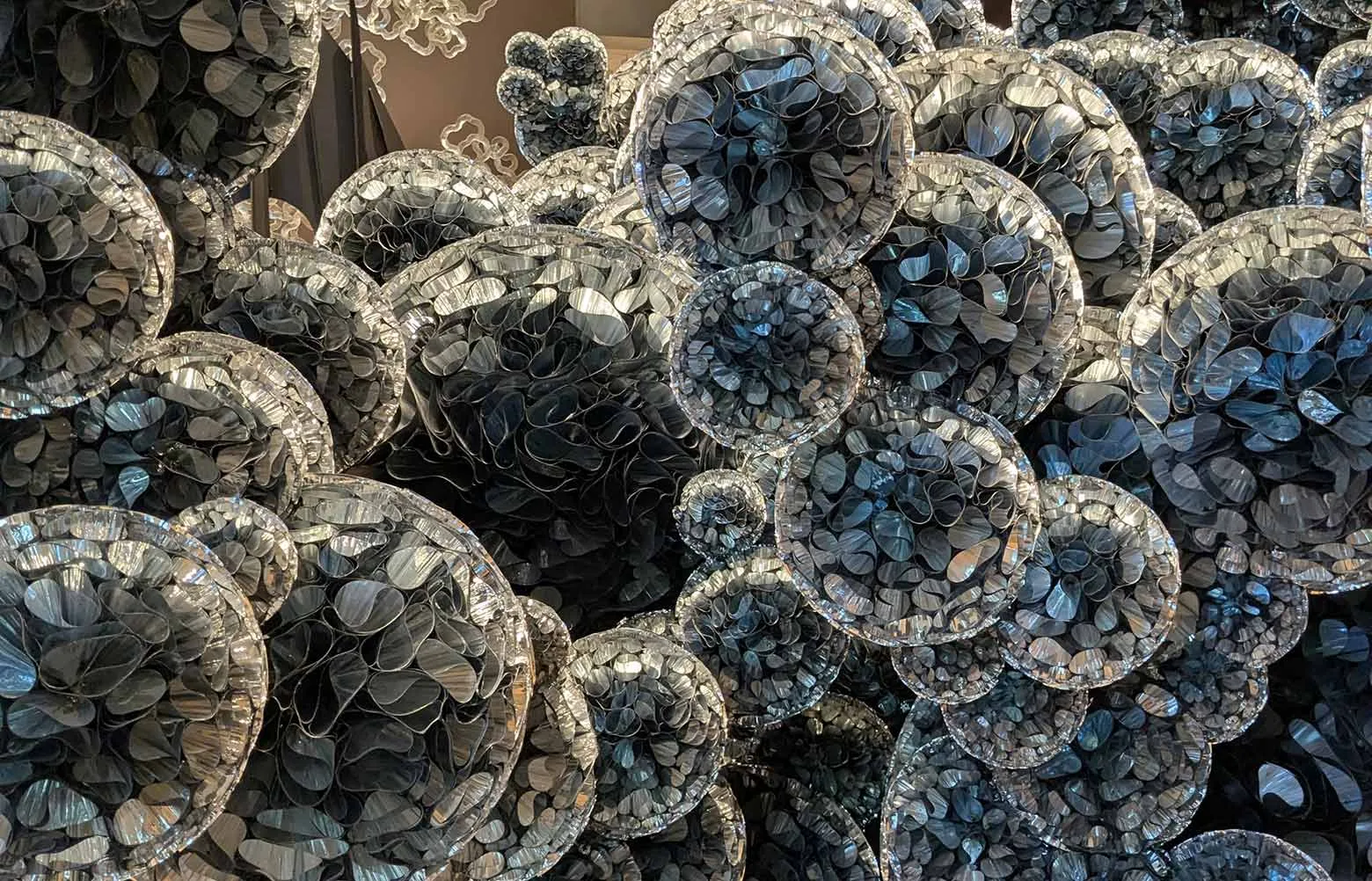
“Monochrome: Calder and Tara Donovan,” on view at the Seattle Art Museum, is particularly delightful this way. With no color around (at least not the kind you’d find in a rainbow), Donovan’s work is animated by light and so changes as you walk around the room and come to understand the forms, the materials, in new ways.
Donovan’s choice of supplies — stir sticks, tar paper, mylar — makes this especially interesting, with the light revealing transformative potentials in the industrial stuff. The most obviously effervescent is the giant untitled mylar sculpture that resembles a molecular structure created in a secret lab inside Studio 54. It looks so glamorously fake that it seems like it must be real, and somehow deeply important. Elsewhere, Donovan’s “Apertures”(materials: stir sticks, light) resembles an alluvial plain as seen from above, if that plain was obsidian black. The tips of the stir sticks seem to wink open and closed as you walk past, a mesmerizing effect to coax from such a humble material.
Two Calders join her work: the hanging mobile “Jacaranda” and the stabile (stationary sculpture) “Mountains.” The stabile feels particularly well-paired alongside Donovan’s mylar rosette fantasy — made in 1976, it seems space-age, suggesting a rocket ship that could burst into the inky blackness of space at any moment. And yet there is a hole cut out of the center, like those cutouts at fairgrounds that you can stick your head through to become a giant vegetable, a clown, or whatever. The work needs you to become whatever it is.
This is the third iteration of “Calder at SAM,” a multiyear initiative featuring exhibitions, programs and collaborations around Calder’s work, made possible by a promised gift to SAM of over 45 works by Calder from Jon and Kim Shirley. Though a small exhibition, it packs in plenty of meaning per square foot. And it shows that even with the rainbow removed, there’s so much to see in the darkness.